

The history of the Christmas buffet

The Swedish Christmas buffet has old traditions, even though eating Christmas food already on December 24 is relatively new. Here we sort out a few things about the Swedish Christmas buffet, with a focus on specialties and peculiarities from Småland and Öland.
Astrid Lindgren’s story about the Christmas buffet
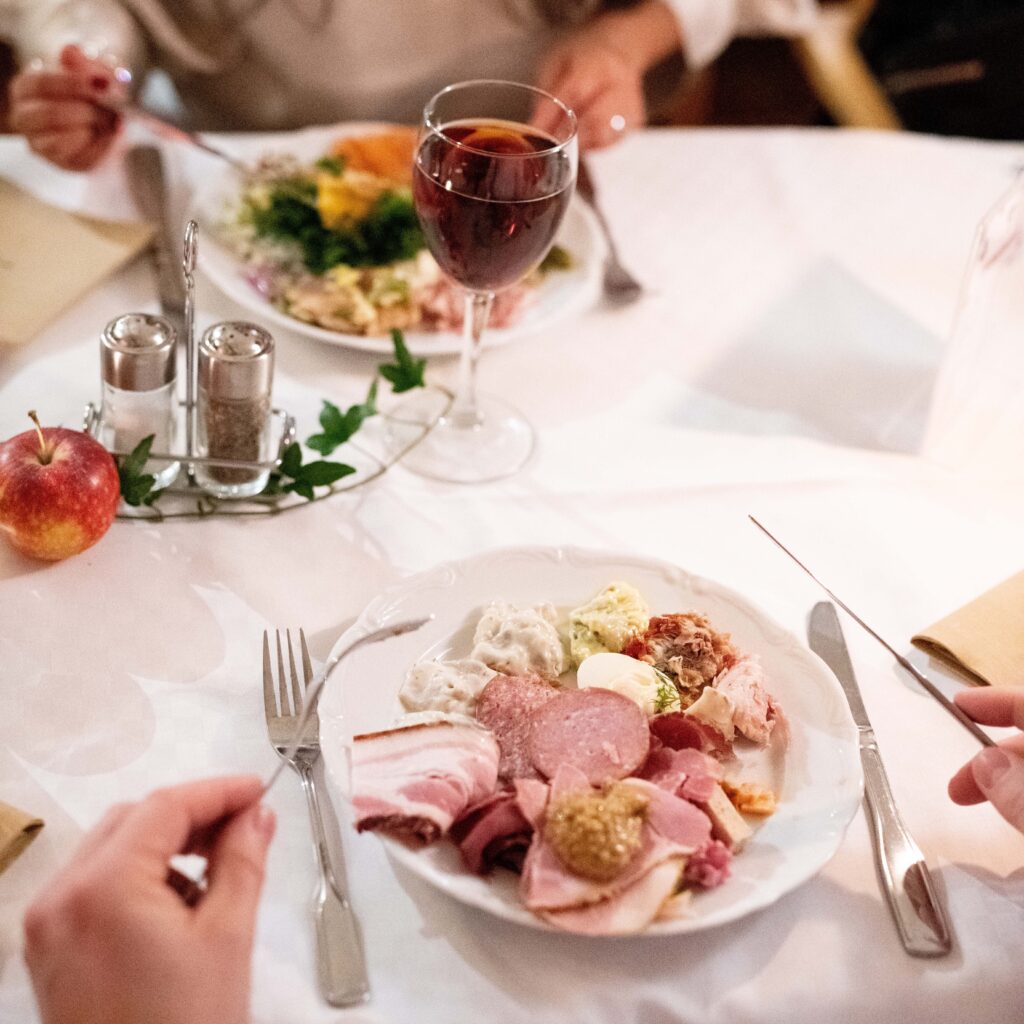
“Sausage and ham and head cheese and palt and all sorts of things.” That is how Astrid Lindgren reads in the film about Emil of Lönneberga. When Christmas is celebrated at Emil’s home, he, in an unguarded moment, invites the hungry paupers to a feast. All the food that his mother Alma and the maid Lina have prepared for days, perhaps weeks, Emil brings out with the best of intentions. There we see what was often found on a Christmas buffet in Småland, as well as in the rest of the country. For the local differences in Christmas food are not that big, even if there are some significant variations.
“Waste and madness,” thinks Emil’s father in the same film. The reason why we eat so much meat at Christmas goes far back in time. During the Middle Ages, Christian traditions were introduced, which meant that one was not allowed to eat meat during Advent. Instead, lye-cured fish and porridge became popular dishes during the fasting period, and when the waiting was over, people could feast on all kinds of meat dishes. Among farmers and in bourgeois homes around the turn of the century, the major slaughter before Christmas played an important role. With freshly slaughtered pork, it was natural to serve blood palt, pig’s feet, head cheese, and sausage. Sometimes the pig’s head could stand proudly in the middle of the table with a red Ingrid Marie apple in its mouth. For most people in the old agrarian society, these days were the most solemn of the year.
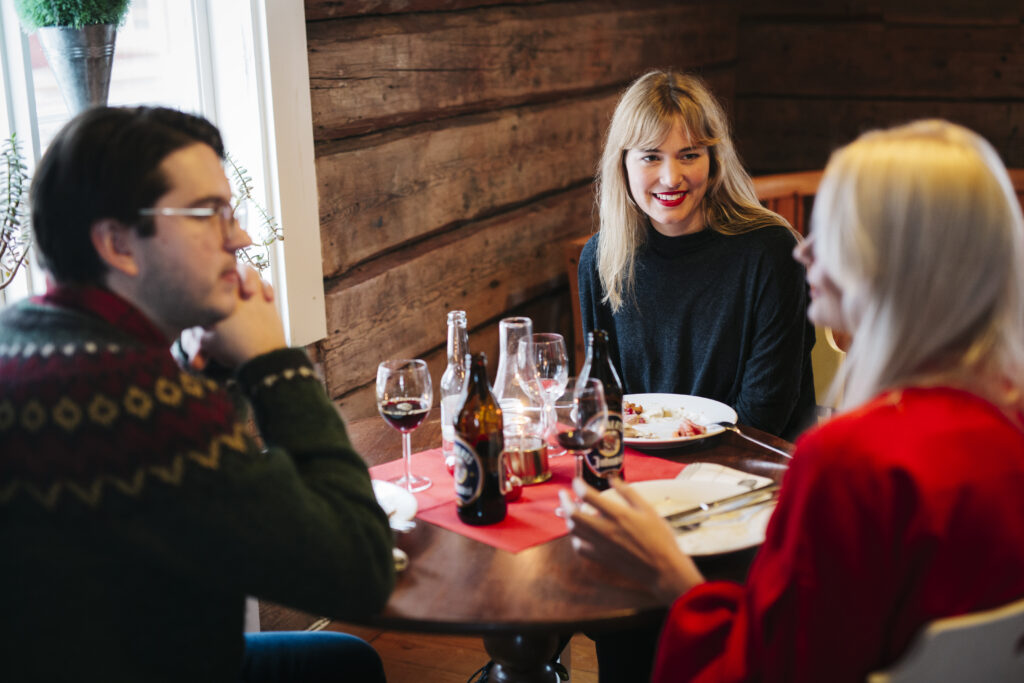
Christmas buffet becomes smorgasbord
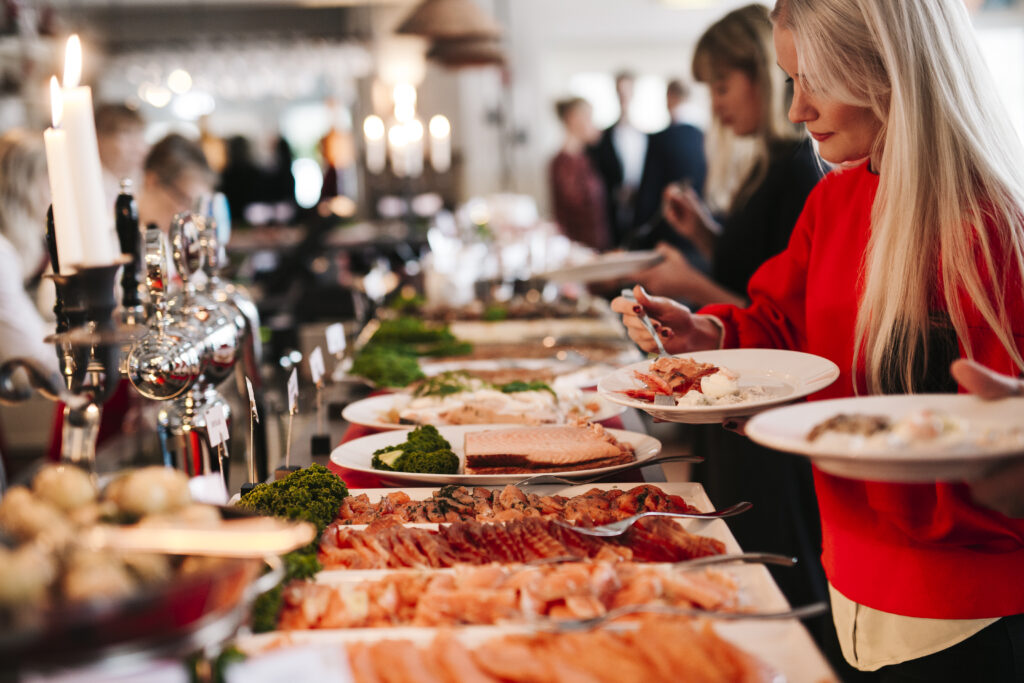
The concept of the smorgasbord, where a buffet of various dishes is served, is associated with Sweden to such a degree that even the word itself has become internationally recognized; smorgasbord. But in earlier times the dishes were divided into two to three sittings, and it was not until the 1970s that we began eating everything at once. The Swedish Christmas buffet has long been both local and global. One example is herring, which comes in a multitude of variations. It entered as a Christmas dish as early as the 1600s, when locally caught fish was seasoned with newly discovered spices from Asia and South America.
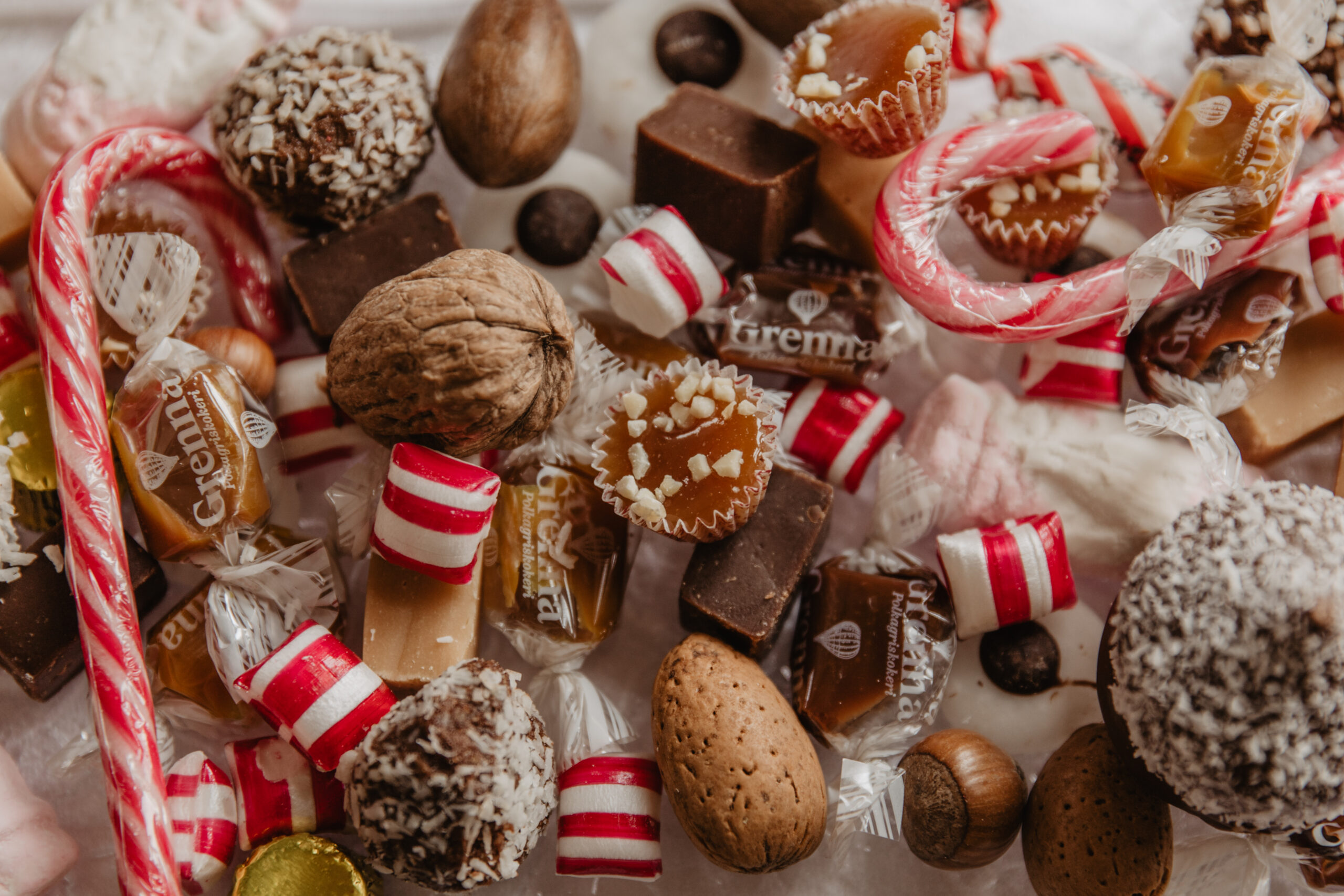
Nowadays, at Christmas buffets in Småland, with a little luck, you might even find herring “seasoned” with peppermint candy canes! These red-and-white peppermint-flavored sweets undeniably belong to the Småland Christmas.
What do we eat in Småland at Christmas?
Dishes typical for Småland and Öland are potato dumplings (kroppkakor), smoked sausages (isterband), and cheesecake (ostkaka). A third of all cheesecake sold at Christmas is sold in southeastern Sweden, and as for the dumplings, they are made only with boiled potatoes and rolled much smaller for Christmas than during the rest of the year. Small, “fine,” white dumplings were served especially on Öland, but also in Småland. These were common in bourgeois kitchens during the 19th and 20th centuries, and are still served at Christmas today.
Along the coasts, fish was generally more common, including at Christmas. Even today, smoked eel still appears on Christmas tables in Småland, and its predecessor was probably the poached, salted eel that was considered a delicacy on archipelago Christmas tables. “Poached” means that the fish has been cooked in a spiced brine and then eaten cold. On Öland, fishing was a common sideline for farmers. Salted Baltic herring and cod, as well as dried fish, were the “poor man’s fare” during winter. The eel was saved for the Christmas buffet.
In more recent times, various vegetarian alternatives have become more common, as well as Swedish pork for Christmas ham and other meat dishes. Buying locally seems to be especially popular during holidays such as Christmas and Easter, and people in Småland like to indulge in a Christmas ham from a nearby farm shop, perhaps a cheese from Öland, crispbread from a small bakery, a game meat delicacy from Uncle the hunter, or a homemade spiced schnapps. But such dishes are eaten all over the country!
Quick fact
All across Sweden, Christmas food is traditionally eaten on December 24, even though it used to be on Christmas Day that the fast was broken with a great feast.
Enjoy a Christmas buffet in Småland and on Öland
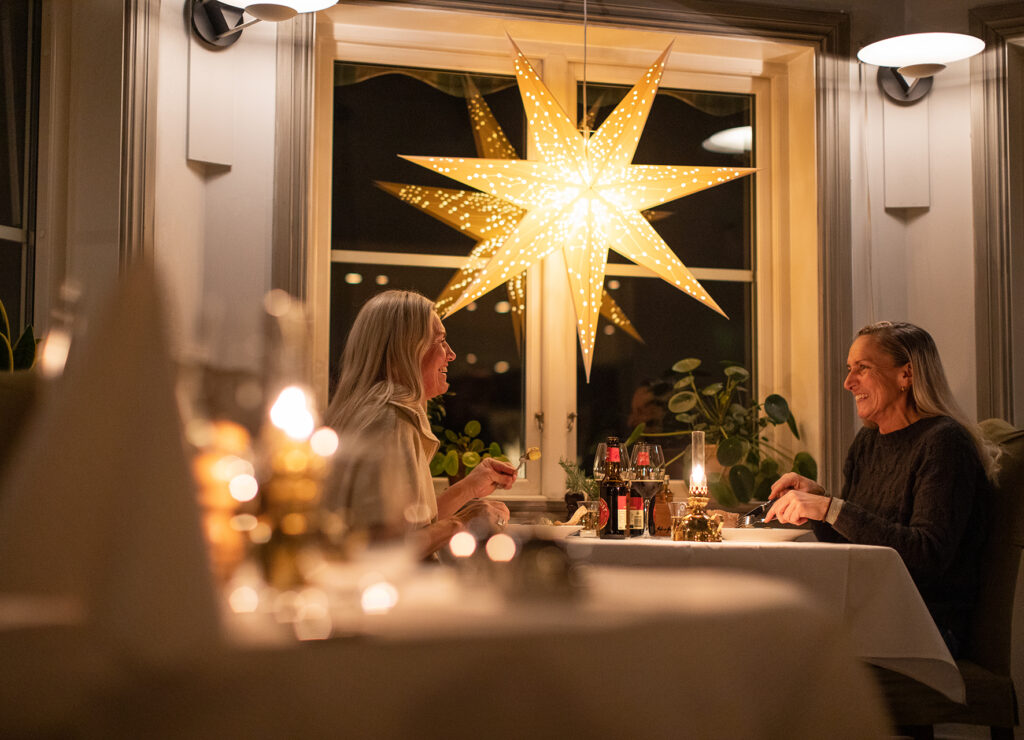
Christmas buffets in Småland and on Öland offer traditional dishes with a local touch. In Småland you will often find potato dumplings (kroppkakor), smoked sausages (isterband), and homemade bread …
Christmas buffets in Småland and on Öland offer traditional dishes with a local touch. In Småland you will often find potato dumplings (kroppkakor), smoked sausages (isterband), and homemade bread alongside classics like herring and ham. On Öland, lamb, local cheeses, and Öland-style potato dumplings are often featured on the table. Many farms and inns set the scene in historic surroundings, giving a particularly atmospheric feeling.
Christmas Markets
Christmas Markets in Småland and on Öland. Meet san…
Christmas in Småland
Take the opportunity to experience the cozy atmosph…